Double Dutch, Dutch Double
RMIT University Master of Architecture Graduate Project 2022
Supervisor: Michael Spooner
Awarded the Leon van Schaik Medal


On the left, we have the right. And on the right, we have the left. The left is intended to hold something of the right, and the right is intended to hold something of the left. The left came first, but the right is where it may have begun.
This project seeks to understand how two things can account for one another, where the context for one is its relationship to the other. It examines the capacity of an architect to hold an idea across a multitude of concerns. The interest lies in the consequences that emerge from the pursuit of rigour, held together by a series of architectural strategies. This project is about practice and practising. It is Double Dutch, Dutch Double.
Robert Hoddle proposed the Hoddle Grid in 1837.
Tilted at a 36-degree angle, it is a rigorous grid that fails to give way to anything other than the Yarra. What interests us are the triangle sites that escape the autonomy of the grid, emerging out of the problem of the grid itself. These little monsters, or triangles as they are, exist outside the context of the plan, created as the consequence of an error in the shift in geometry. They become parklets, reserves, leftover spaces; they are forced to be something else as they do not fit the ideals of the 19th-century Roman neoclassical planning model. If we can find the problem in the site, then we may be able to hold it in our architecture too. The consequence and moment where one thing has to give way to another is what interests us.


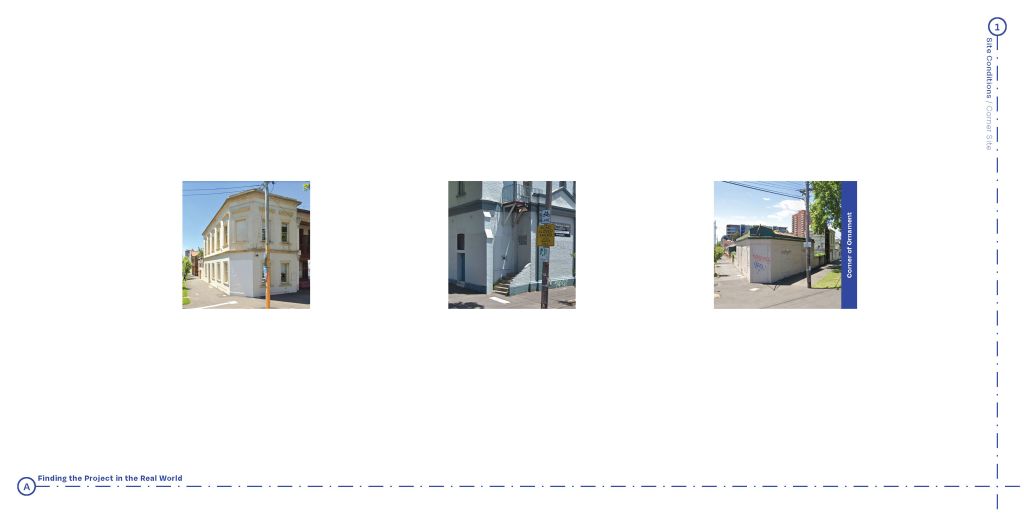
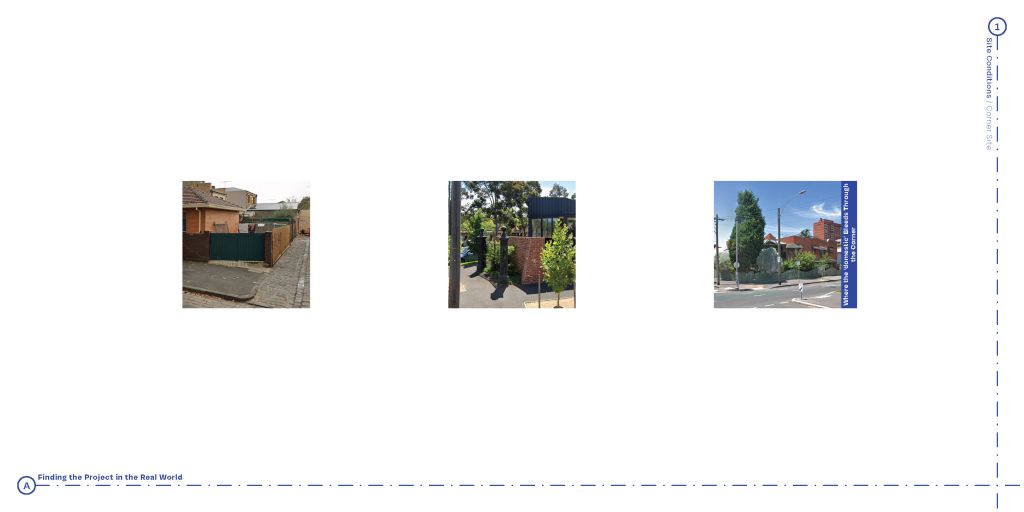
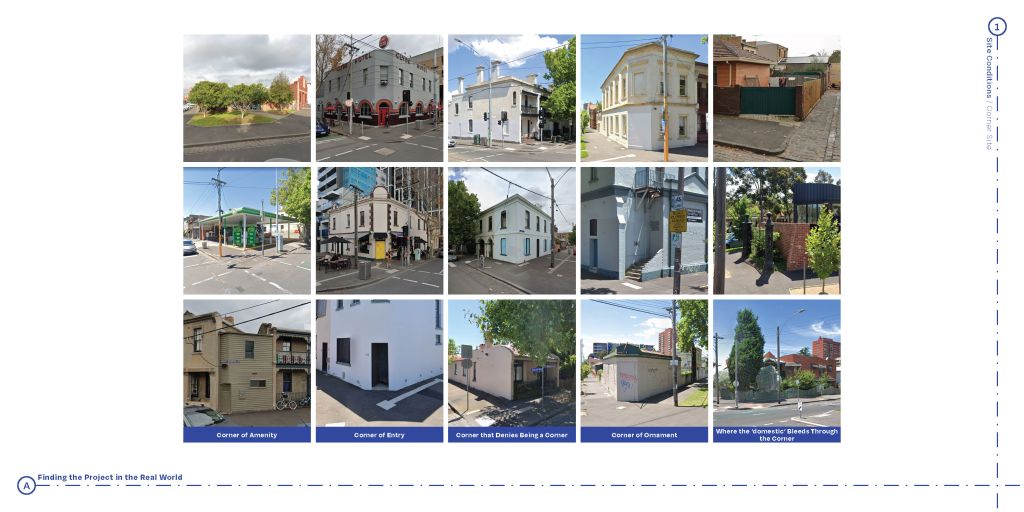


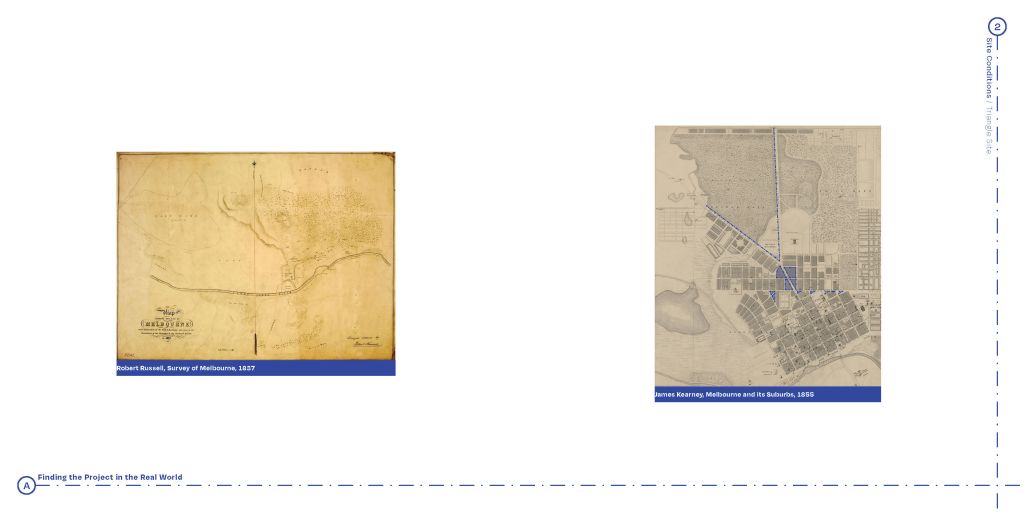
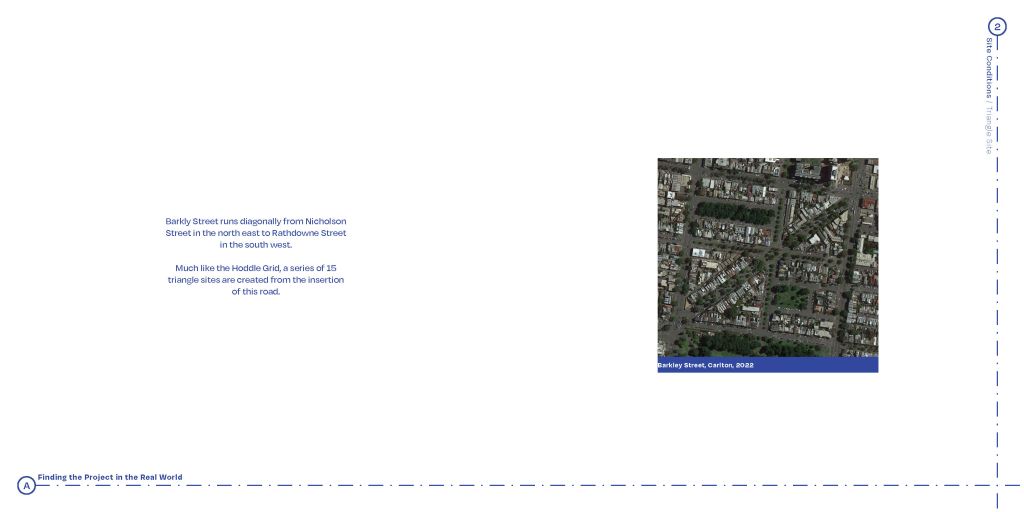

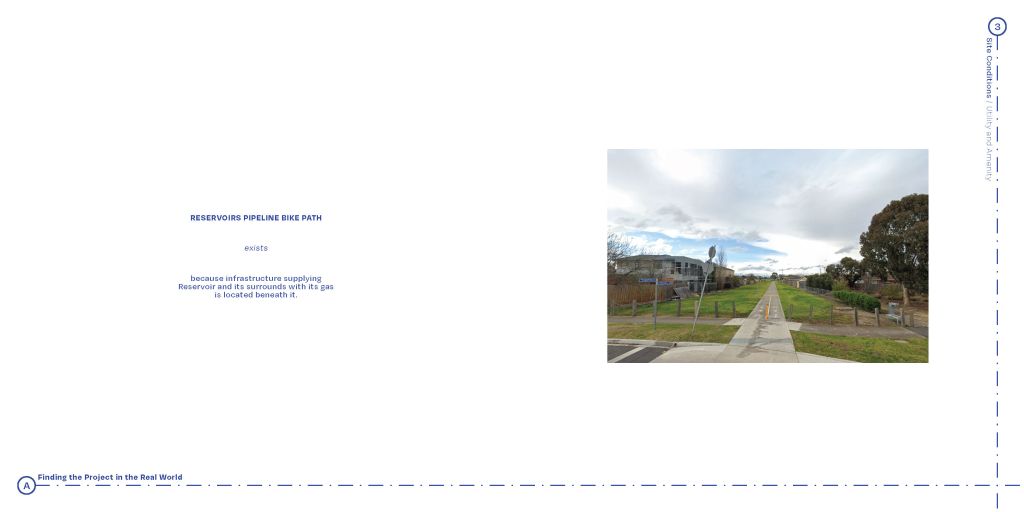




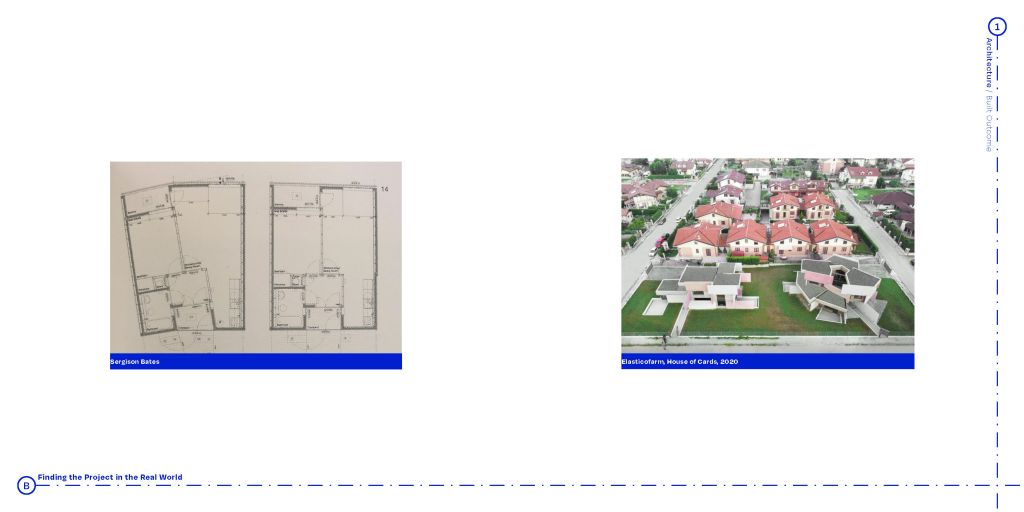
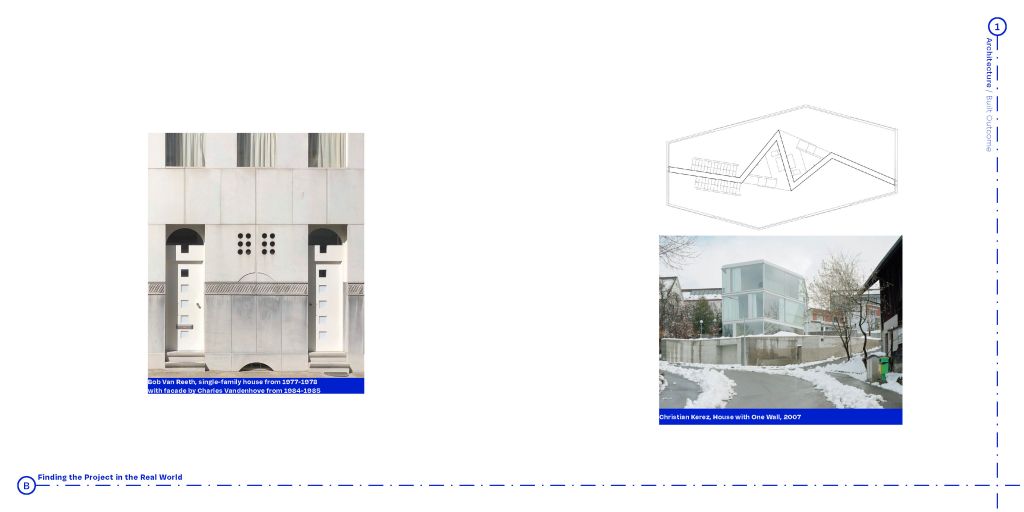
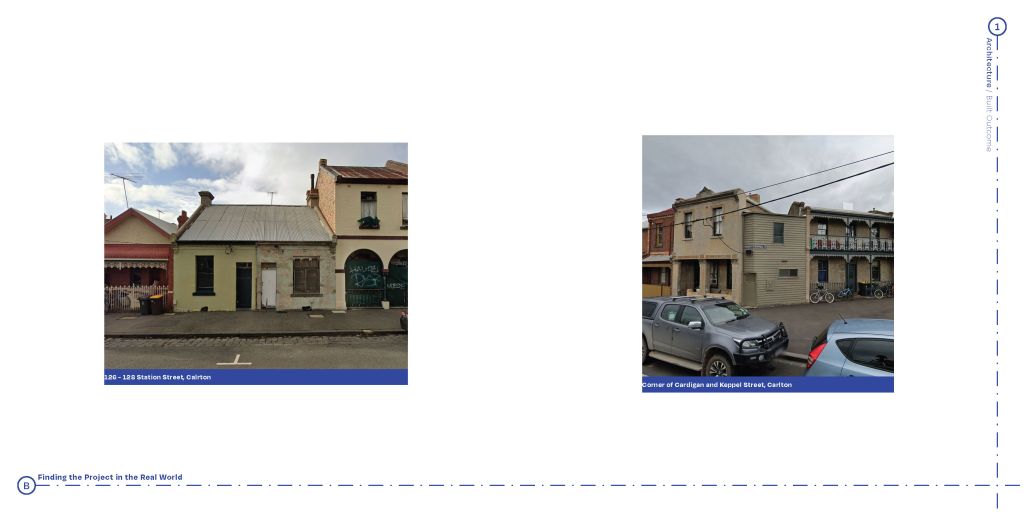
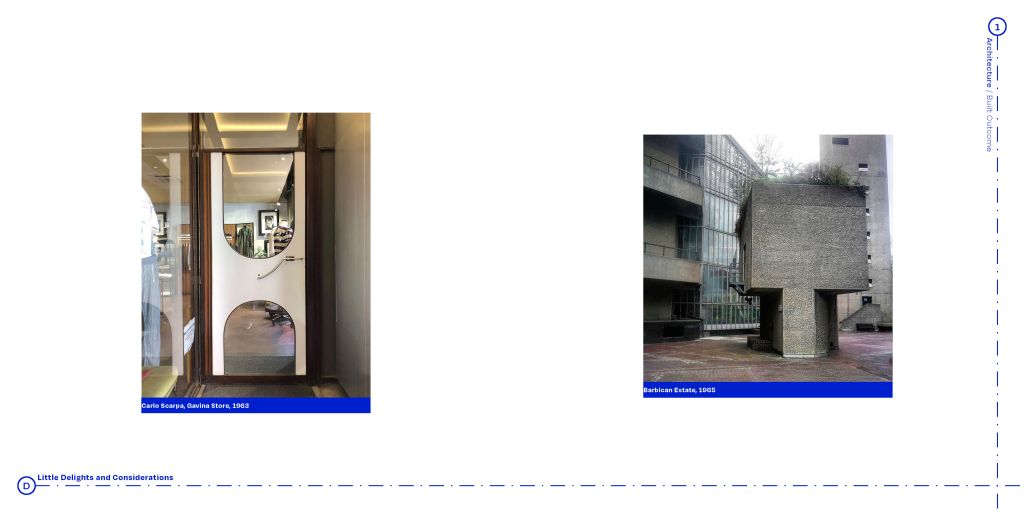

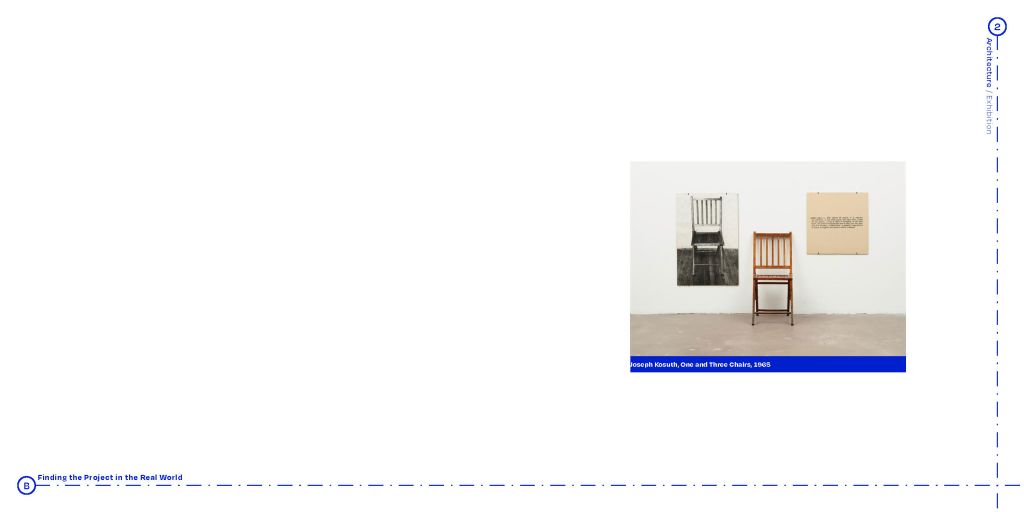



A mirror of this condition can be found on a smaller scale, across a few blocks in Carlton. Barkley Street inserts itself diagonally from Nicholson Street in the northeast to Rathdowne Street in the southwest, creating a series of 15 triangle sites through the insertion of a singular road. Amongst the collection of 15 are two adjacent neighbouring triangle sites. These two sites have been home to this research project for the past 15 weeks, serving as a testing ground for ideas.
A collection of five case study houses was proposed on one site, and five case study apartments on the adjacent neighbouring site, attempting to mirror one another. This project explores the conceptual passage between two things and how they reverberate across one another, examining the extent to which an idea can be held.
Introducing Triangle Home
This is Triangle Site A, located on the corner of Rathdowne and Barkley Street, where four pieces of concrete pavement currently mark the spot for a single car park. Home insurance defines the legal definition of a home as goods within a room enclosed by four walls and a roof. This proposal explores an architecture that does not conform to how insurance companies would understand it.
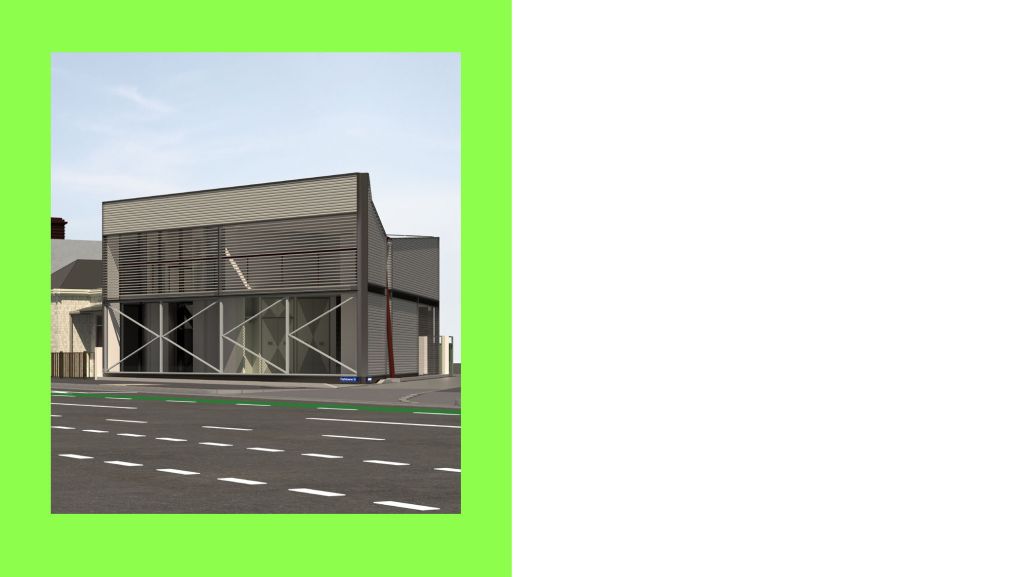

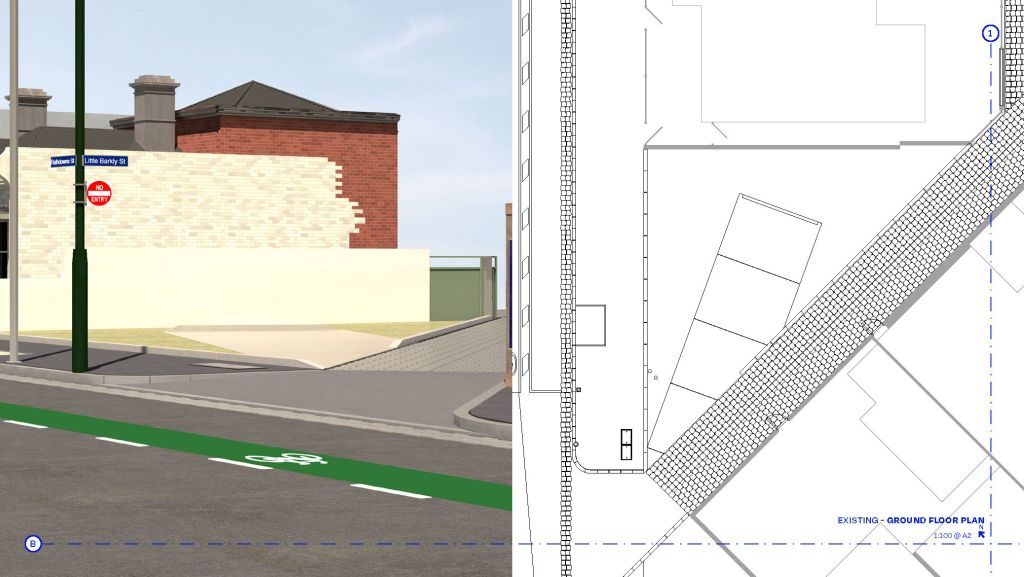


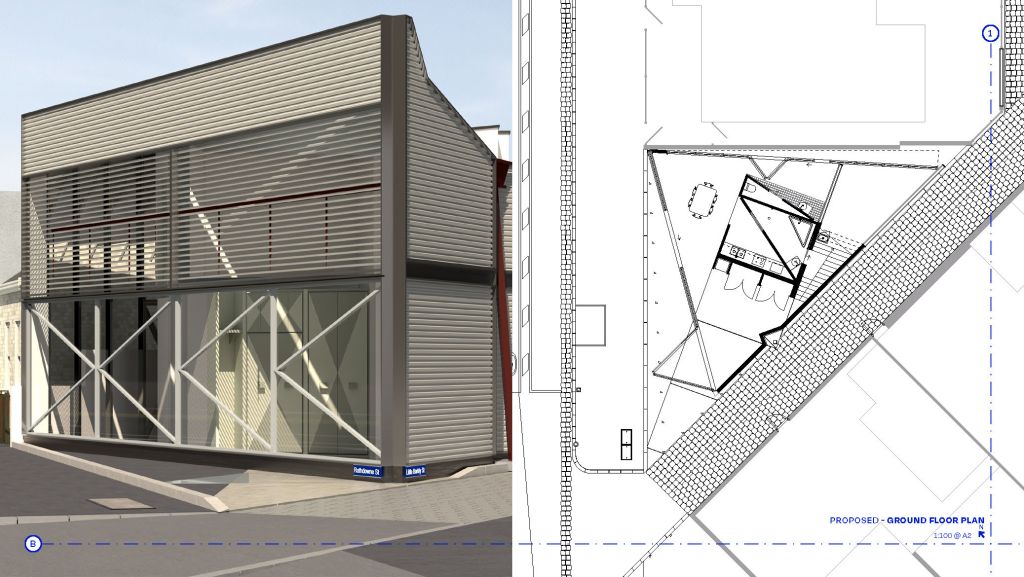
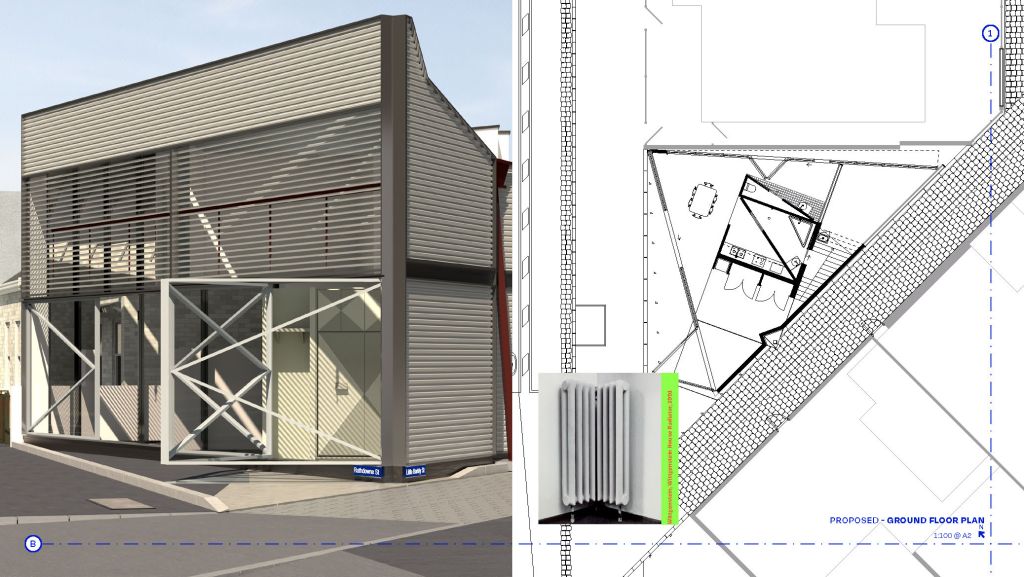
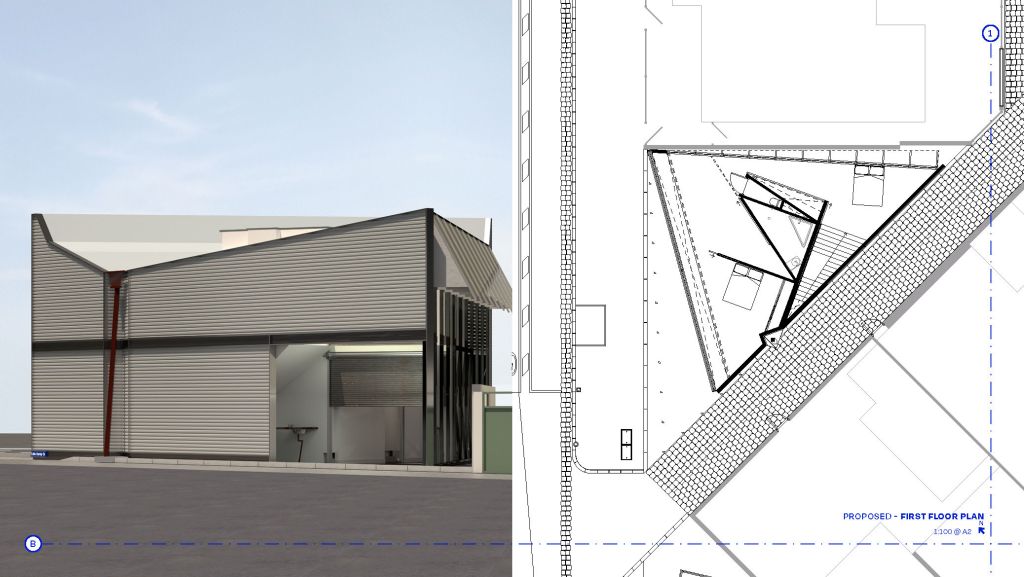
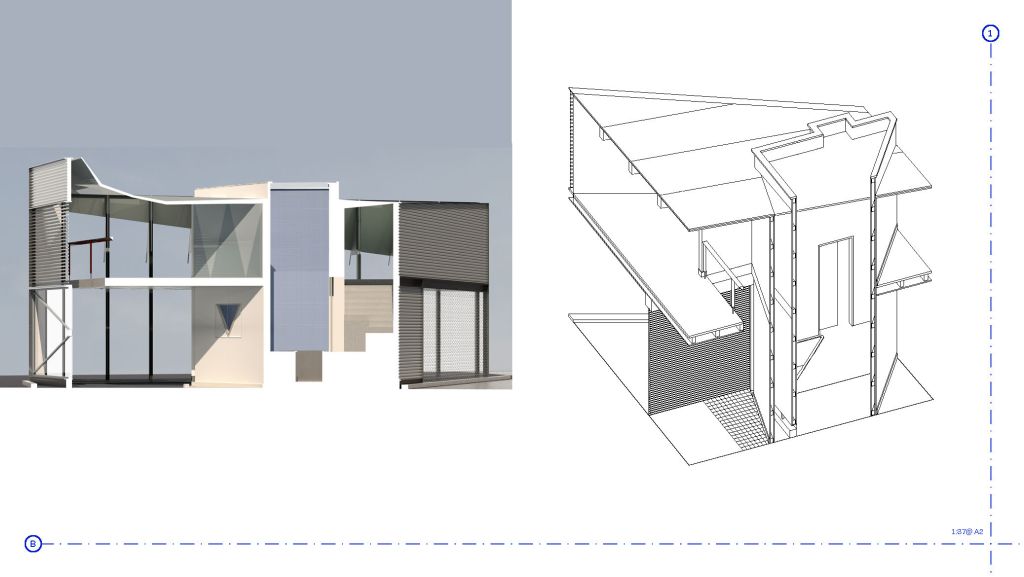


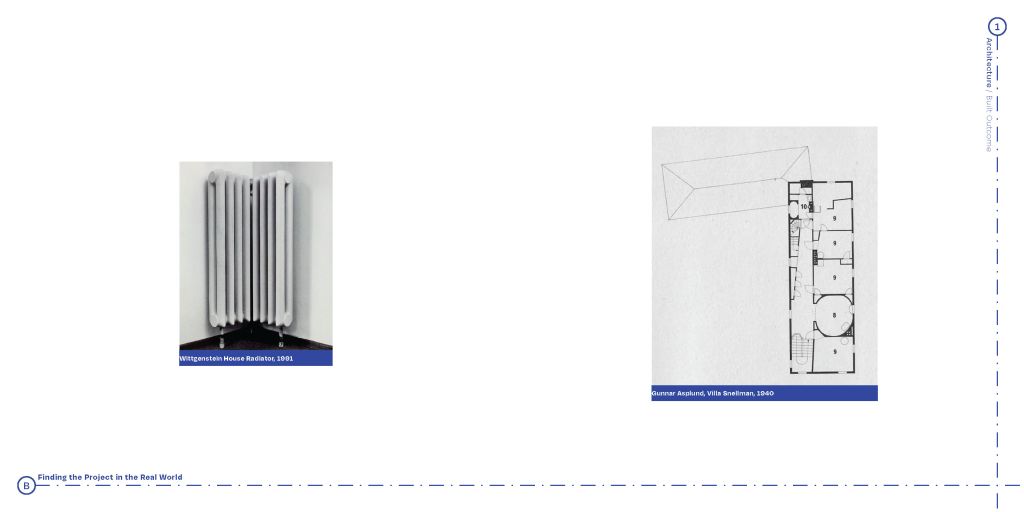
Our architecture conforms to the rectangular property boundary, but the collapse of one side reveals a new truth. Much like Wittgenstein’s radiator, which bends as a consequence of the rule that all radiators in the house are to be placed between windows, this project applies a similar logic. Through the pursuit of this definition, a series of consequences begin to emerge. The location of the internal walls is determined by the four pieces of existing concrete pavement currently on site. As a result, the arrangement of the walls insists on a set of relations held within the geometry. One thing informs the other.
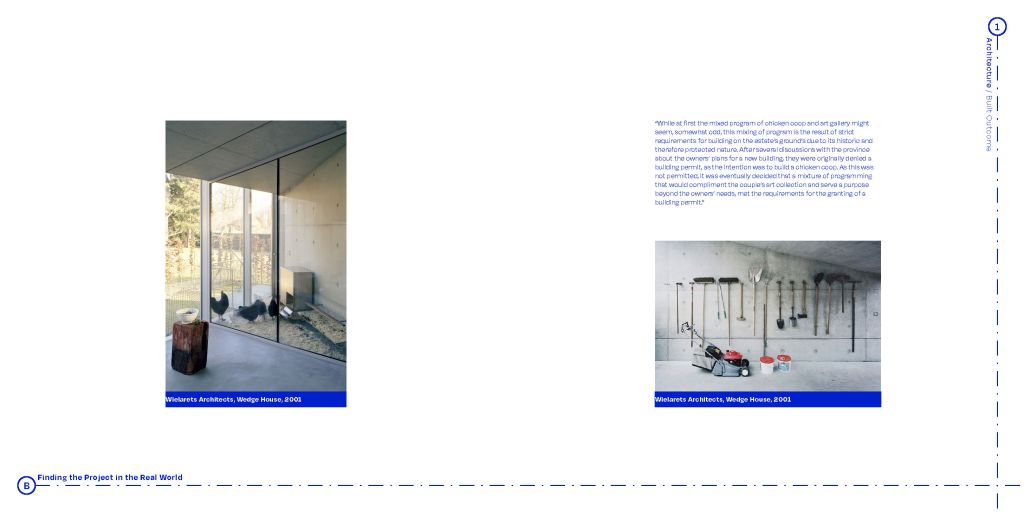
The entry to the bathroom must not face the entry to the kitchen, forcing the bathroom entrance to be located through the stair and creating a double-height space for the bathroom. The whole house shifts as the ground is raised to sit flush with the bathtub. The basin for the toilet is located within the living room, outside the toilet room itself, as we cannot defer from the truth of the triangle. A lightwell above the toilet allows light into an otherwise narrow space. What would have been leftover space now holds promise.
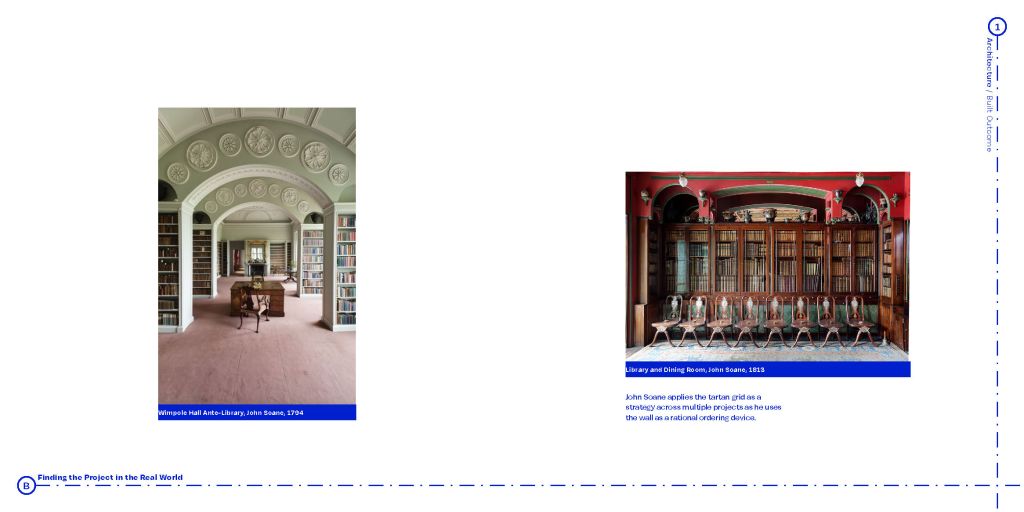
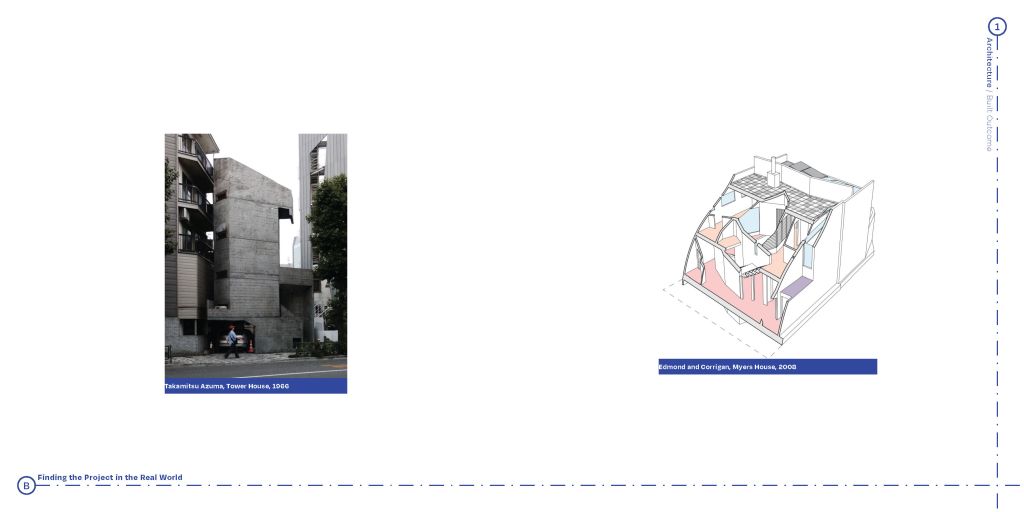
The truth and unfolding of the triangle allows for a series of episodic moments to emerge from the architecture. Corridor spaces are eliminated as the interior becomes a series of rooms to move through, an architectural strategy reminiscent of Palladio’s architecture or Edmond and Corrigan’s Myers House. The role of the architect emerges as a play between intellectual ideas and the ability to intend and be responsible. But when does the rule become an absurdity?
We can follow a rule, but it is very rare that we actually understand what we are doing and how we are doing it.
An additional four homes were proposed on this site, where the existing car park spot was prioritised because I could not see past it or seek to ignore it. My preconceived idea was that I was engaging with the existing, but perhaps it actually operated as an organisational tool, much like the grids in our drawings. The idea is held by the grid.
Introducing the Apartment
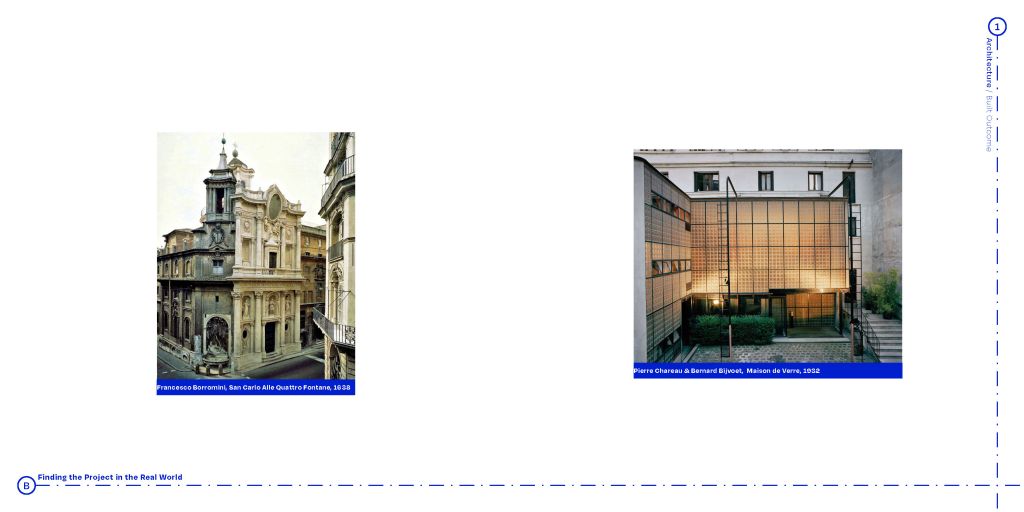
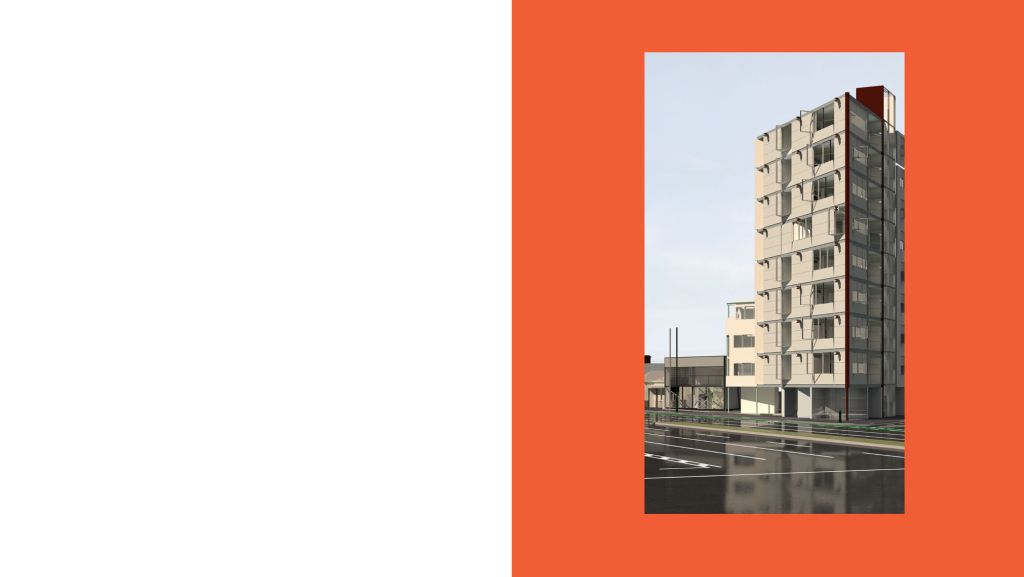
Much like Vitruvius’s column for the Casa Bertani, the building from the prior proposal becomes an instruction manual for itself and the next. The building itself passes on the instruction, held by the original idea. This is Site 1, the neighbouring triangle site to Site A, where the previous house was proposed. An apartment is proposed on this site, mirroring the qualities and lessons learned from the previous home. The idea is for the proposed apartment to hold the same complexity of relations while dealing with a greater demand in scale and its own typological concerns that cannot give way.
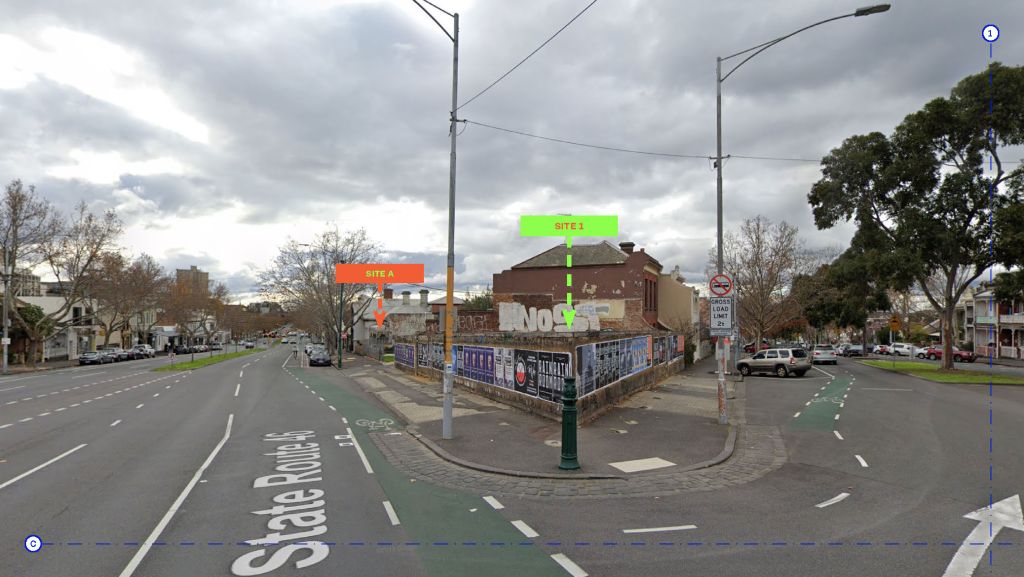

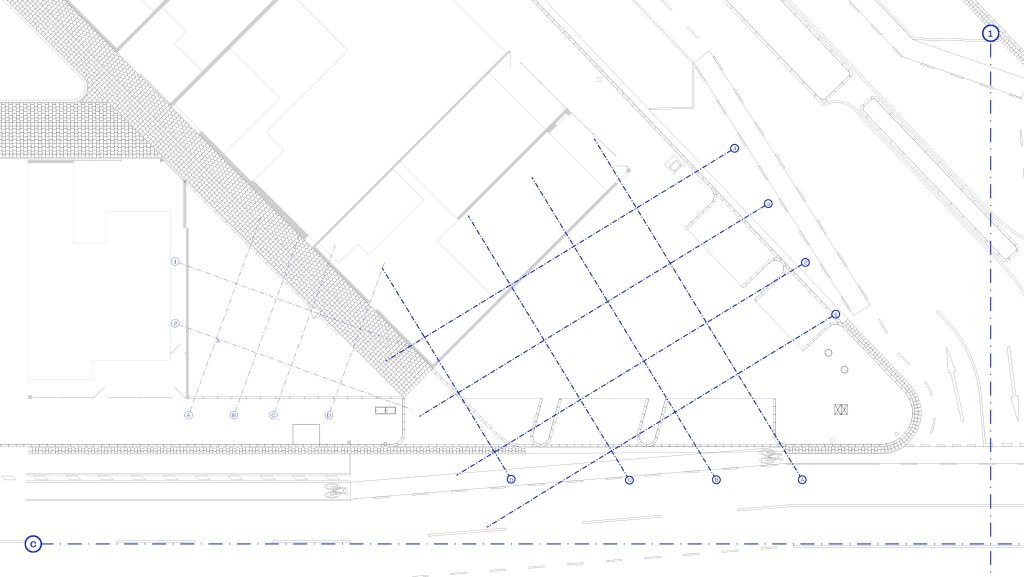
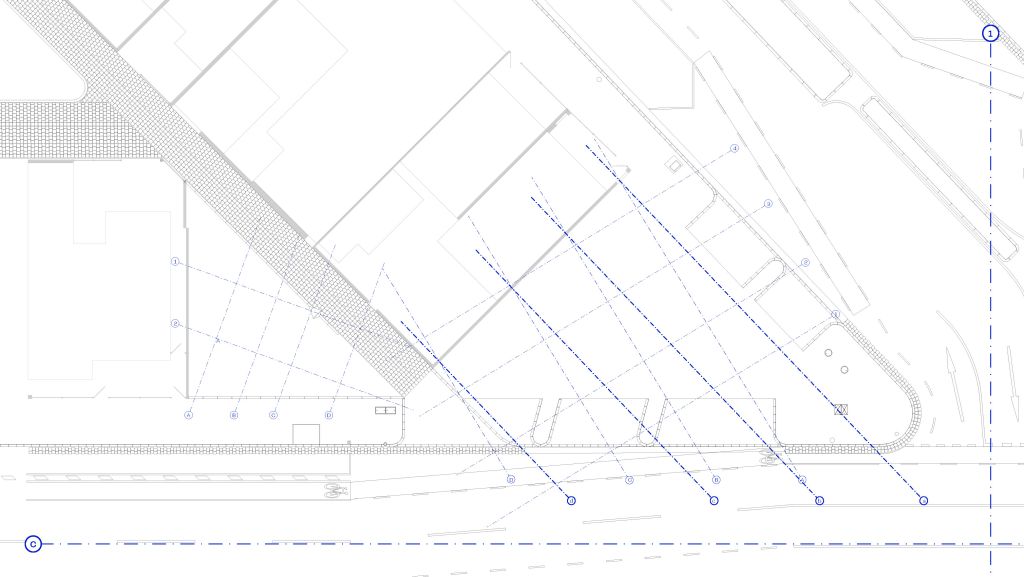

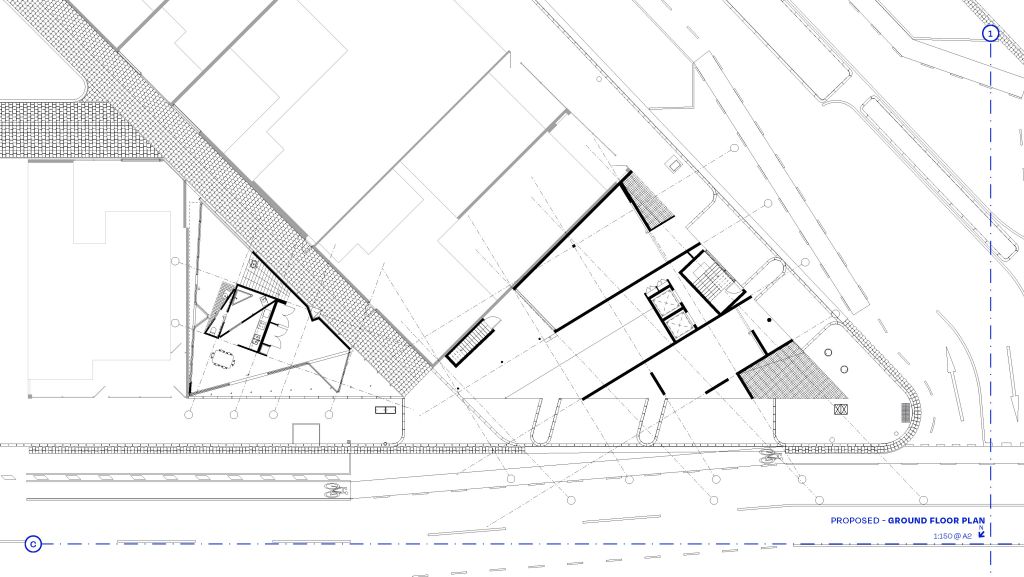


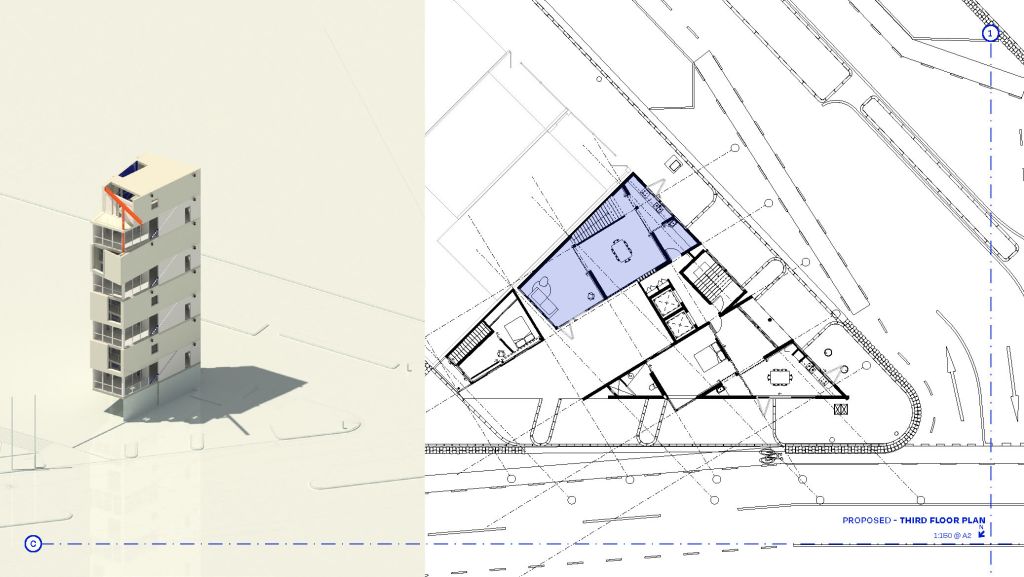
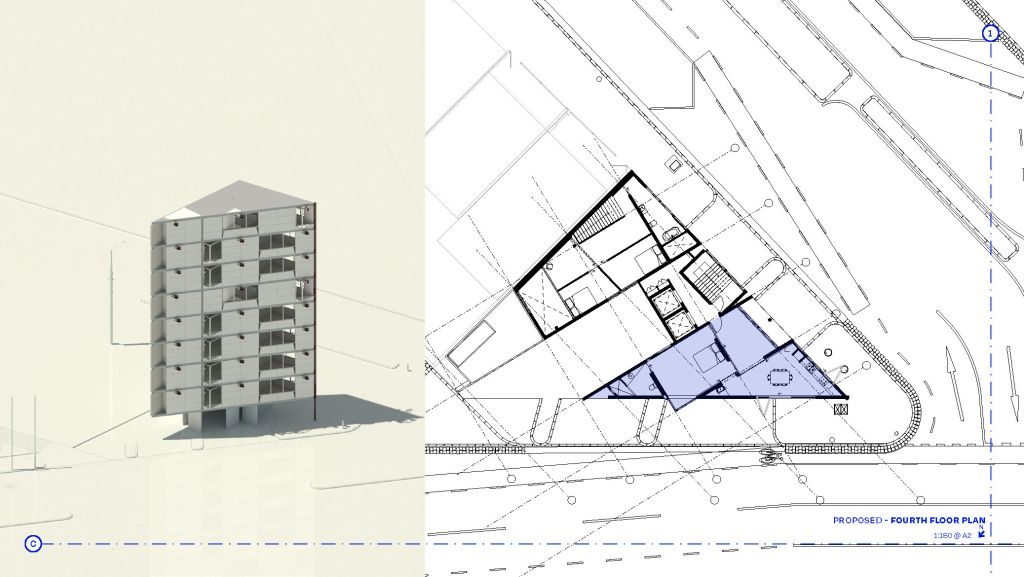


The grid that held the ideas of the prior proposal is directly translated and applied to this neighbouring site. A discrepancy emerges as the two triangle sites are of different angles. A secondary grid is introduced, one that specifically aligns perpendicular to this triangle site itself. Like the Hoddle grid, a series of accidental triangles begin to emerge. The idea and condition of the site are folded into the structural system of this project.
An apartment is proposed following the two grids, one for structural and the other for free-standing items. The plan is the instrumental tool for both the project and for understanding the project. This proposal attempts to mirror the qualities of the prior home as much as it mirrors itself, incessantly folding the idea into itself.
The core is inserted and begins to organise the proposed structure. The lifts align with one set of grids, while the staircase responds to the other. They tilt towards one another, holding the common space between them. A single tower, which could be understood as a building in its own right, guards this proposal. Columns uphold the upper levels, leaving the ground plane open. The shape and form of this negative space hold the proportions of one out of the four concrete pavements of the existing condition of the neighbouring site.
A ten-storey apartment with five homes sits behind this guard tower. A beam cantilevers three metres on the upper floor, its function purposeless other than to hold the idea of the grid and the watchtower in front, which also has an exposed beam. Parallel to this are a series of apartments that take on a triangular form. A void runs in the centre, holding onto the phantom of the car park spot from the neighbouring site, acting as the spine that binds this proposal together. The idea is held through a negative space.
What interests us is not the apartment itself but rather the conditions that emerge from the rigour of following and holding an idea. The apartments on the left take on a rectangular form, while those on the right take on that of a triangle. A discrepancy emerges between the two as we attempt to make them hold the same qualities. This mirrors the site condition of the project itself, being mirrored into itself. Similar qualities can be held by the two, but the qualities can never be identical. The moments of difference are what interest us.
Consequence 1
A perfectly square room is created in the rectangular plan. The dimensions of a perfectly square room cannot be held on the right as the triangular perimeter prevents it. Instead, the façade is forced to extend out, forming a bay window. A singular material is applied to the interior, attempting to hold the dimensions and illusions of the perfect square room it mirrors, despite knowing that it can’t be. Additionally, the square room is only complete when the sliding walls meet the point of the column, closing an otherwise open, episodic plan. The walls glide by one another, enforced by the grid. Timber door handles on the left begin to hold onto the qualities of the exposed timber stud frame for the free-standing wall on the right.

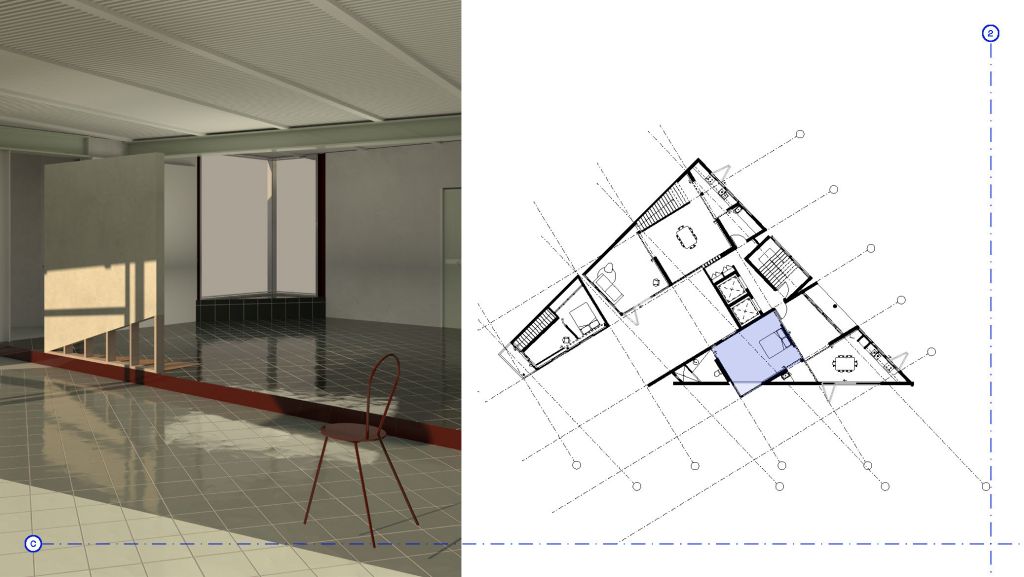

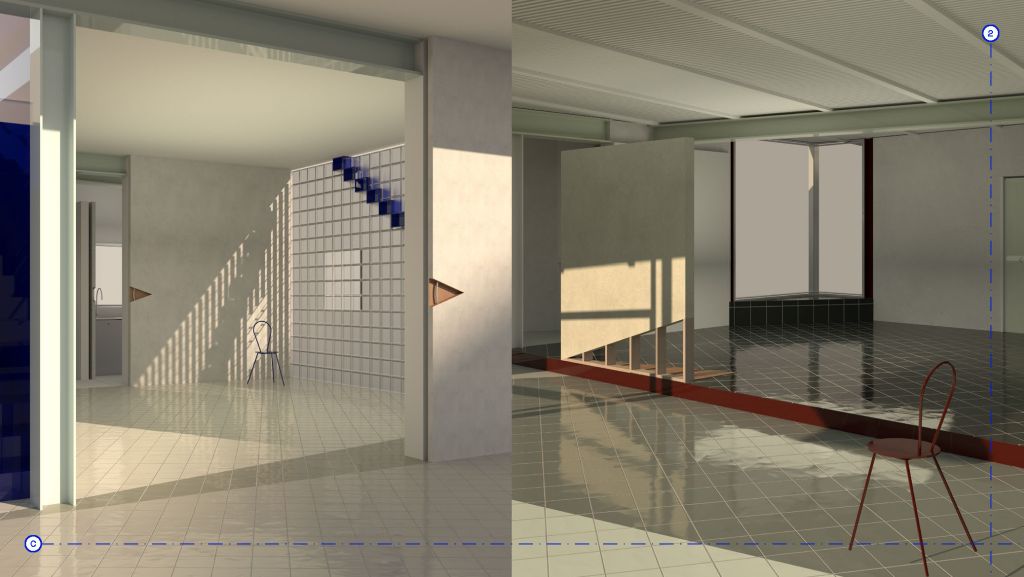

At a smaller scale, the internal plan for each individual apartment folds into itself. The desk, which could allow for a laundry area but could also be a study desk, is mirrored in the bathroom layout, where a triangular basin greets you at the door.
Consequence 2
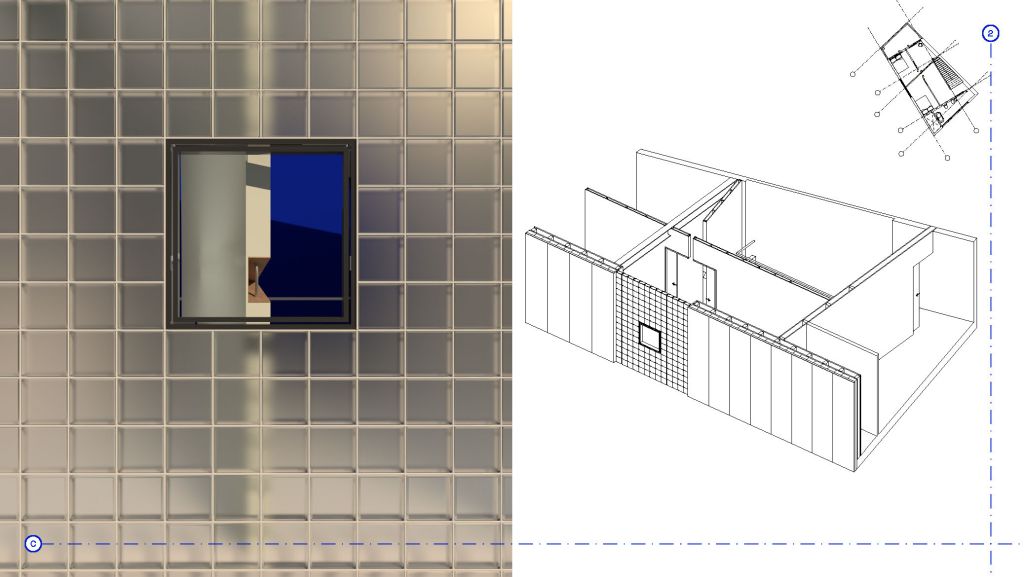
The idea of a sliding wall is carried through in another form for the rectangular apartment, expressed in the upper floor arrangement. A 91 mm insertion is placed into a stud wall, just enough space to allow a sliding door to pass through. The door glides diagonally as it follows the grid line. This space can never be fully enclosed, much like the room that hopes to be square. A window is inserted between glass bricks to celebrate the consequence and difficulty of holding the idea. The irony of placing glazing on glazing is not lost on me.
Consequence 3


This project is about mirroring itself as much as it is about holding the qualities from the previous home proposal. The slight sliver of a lightwell for the bathroom in the prior proposal is carried into this one. The area for the bathroom on the upper floor is larger than necessary. Made smaller, a double-height space is inserted directly above the entrance to the apartment below. The entrance is through the laundry, much like older suburban houses.
Consequence 4
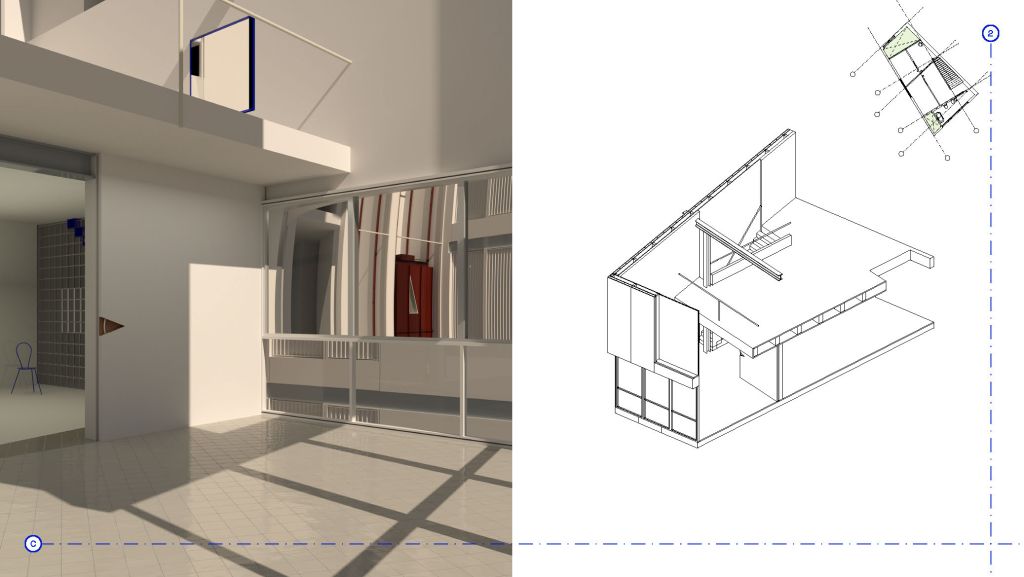
A few metres away, on the other side of the apartment, the condition is further held. A double-height space exists in the living room. Much like a seesaw, both sides must hold the idea. A push and pull, a give and take, a double dutch, dutch double.
Consequence 5


The internal mirroring extends to the exterior of the façade. The southern façade attempts to mirror the northern façade, but fails to fully replicate it. Although the window frames are identical, the windows are partially blocked to accommodate the kitchen exhaust behind them. The façade design begins to reveal the underlying program. There is a subtle colour variation between the façade panels on the southern side, so faint that it makes you question whether the difference is real or merely an illusion.
Consequence 6

The beams extend beyond the façade, capped as they dress the façade. This serves as a physical manifestation of the grid. The corner of the façade cannot align perfectly; the size of the façade panels is dictated by their modular dimensions, as the other two walls must conform to the grid. The corner that can never be fully closed now allows light to enter the bathroom behind it. Similar to Wittgenstein’s house, where misalignment suggests elements beyond the scope of architecture, this feature acknowledges the presence of things beyond our architectural awareness.
This project is unified by a series of architectural strategies. It investigates the conceptual transition between two elements and how they resonate with each other—a reflection back and forth, one to the other.
- The found condition versus the consciously crafted condition.
- The intellectual idea versus the material object.
- Cause and effect / effect and design.


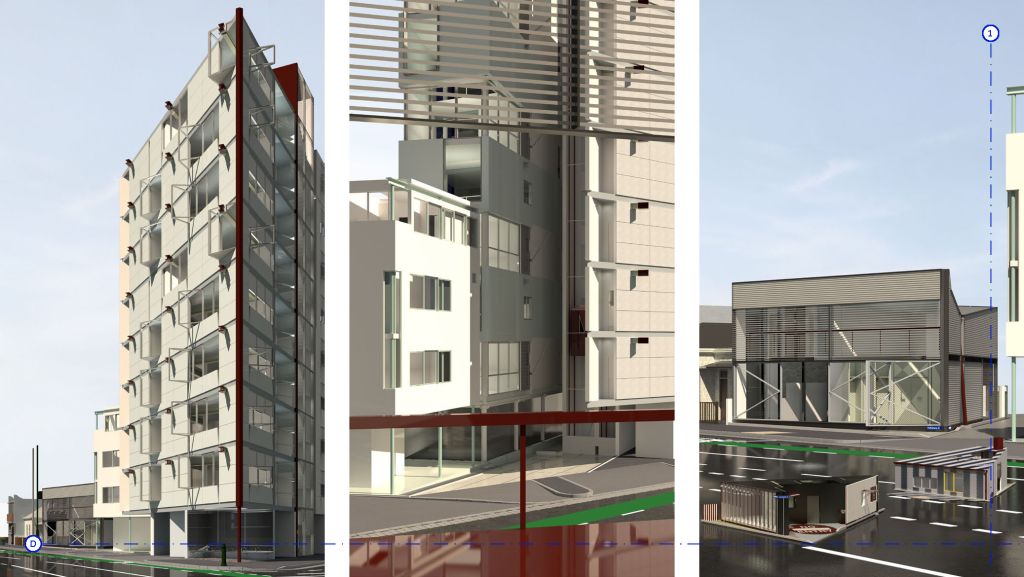
Architecture embodies the potential for possibility.
Initially, this project was caught between discovery and execution, aiming to uncover something unknown and employing the process of design as a means to this end.
The project now realises that its research has centred on reflection and the architect’s capacity to sustain an idea. It is concerned with architecture that embodies honesty and the mechanisms that support this. The idea exists because it is embodied by the building, not merely because it is asserted. Only by understanding its value can we identify which strategies are worth translating.

 thexhausted.com