Carnegie Local
RMIT University Master of Architecture Graduate Project 2020
Supervisor: Michael Spooner
Awarded the Anne Butler Memorial Medal

Welcome to the Carnegie Local—your expo for everything Carnegie and a celebration of the local community. As you leave the station, don’t forget to pick up your Koornang Road gift card and CALO tote. Join us for a guided tour of the site with the one and only Pete the Chef!
This project aims to place the Victorian suburb of Carnegie on the global map through an international expo centred around the theme of ‘the local.’ ‘The local’ explores the essence of a place when examined closely: the nuances that define it, how it is perceived by those who live within its physical and metaphysical boundaries, and the specific details, experiences, sights, and stimuli that contribute to its unique character. It represents the core of a place that sets it apart from everything beyond its scope.
The expo envisions Carnegie’s local identity as a reflection of a global understanding of the condition. Taking inspiration from the Ballarat International Foto Biennale, which showcases how the local can achieve global recognition while redefining its context, this project aims to bring Carnegie to a similar prominence. Renowned as Australia’s leading photographic festival and presented in Italian, the biennale not only extends its influence beyond Ballarat but also shapes the cultural landscape of the city itself.
The essence of the collective local emerges when boundaries become more defined. When a place is contained within its own physical or metaphorical limits, a distinct collective identity can develop, or it may be characterised by its isolation. These boundaries and isolation often reveal unique characteristics, which can evolve into a distinctive identity. This project embraces this condition as a civic presence and uses the expo to highlight and celebrate it.

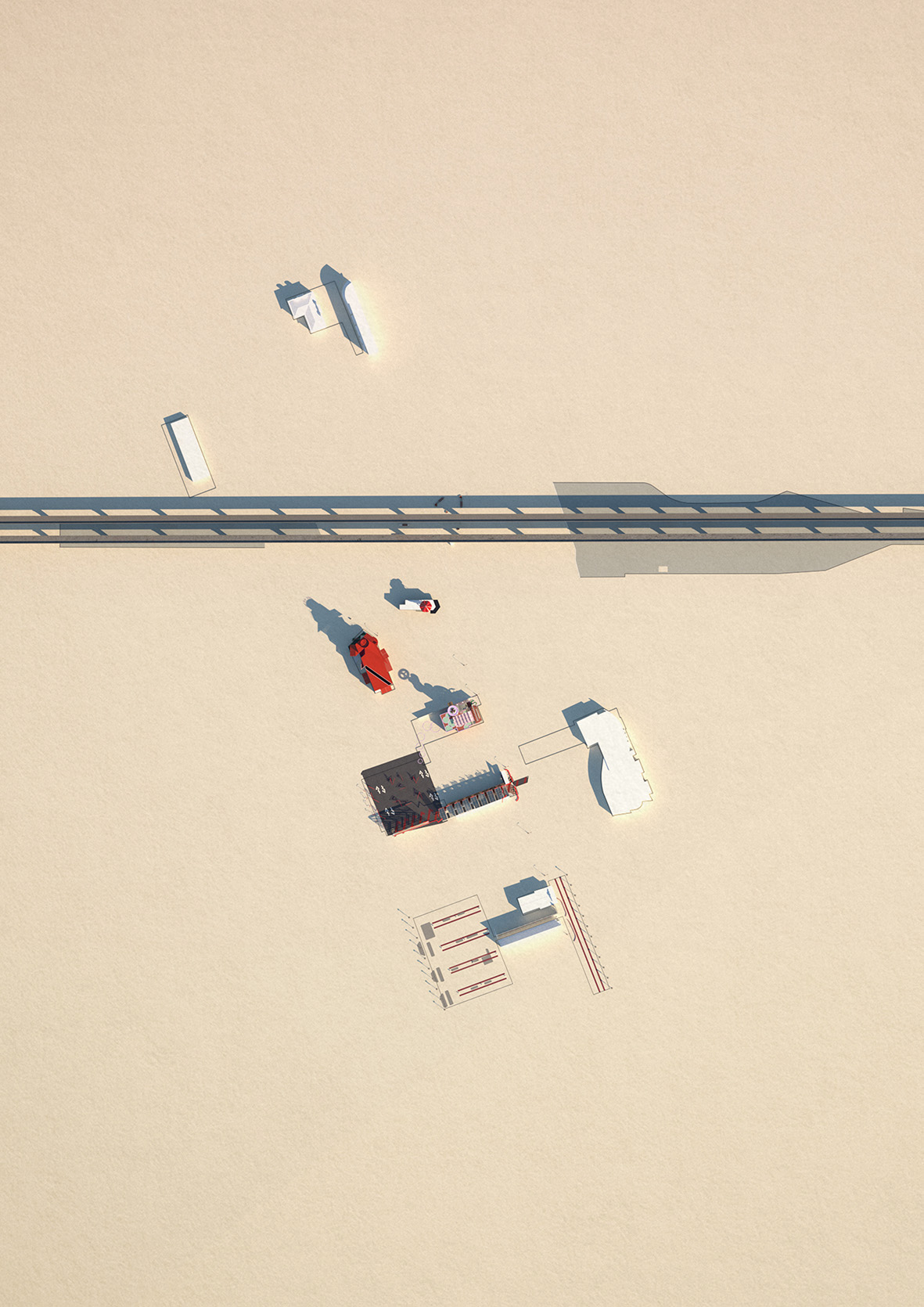
These narrowed boundaries are explored in the expo model, where the entire precinct’s program is confined to a single piece of infrastructure and its threshold. The pavilion’s design responds to the character of the existing Carnegie building it occupies, aiming to extend and enhance its presence.
The expo’s prominence is highlighted through branding and signage. Posters are strategically placed throughout Carnegie’s main street, on shop fronts and streetlights, to build anticipation for the event. Architecture itself is employed as a signifier for visitors, with design elements positioned to attract attention from the sky rail and at pedestrian level along Koornang Road. Pavilion iconography serves to provide a sense of satisfaction, fulfilling the need for detail in a model where the entire precinct is contained within a Koornang Road building.
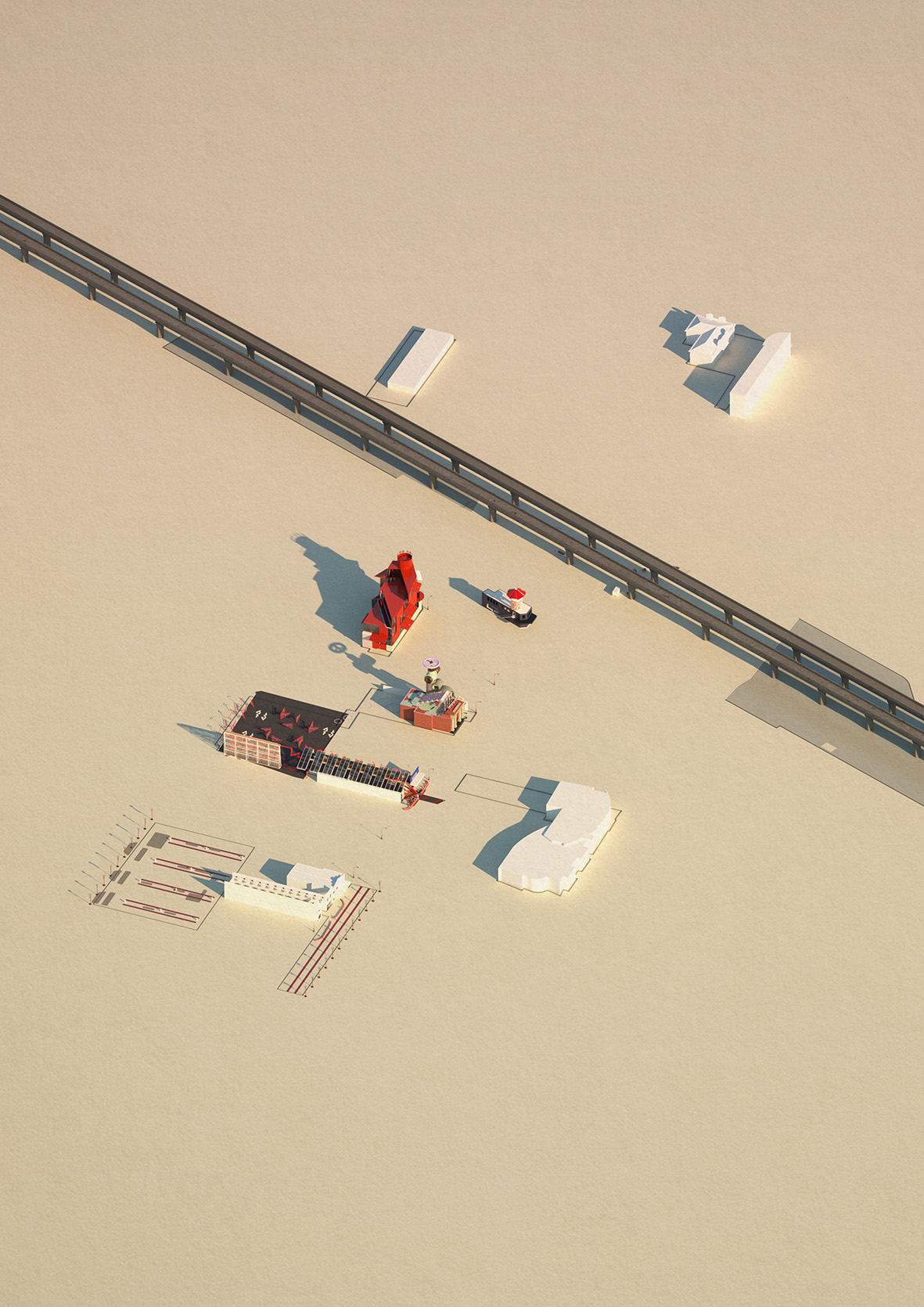

Each pavilion adopts a specific procurement method within an overarching model that merges local and international entities to secure funding. This effort to bring a global presence to Carnegie highlights the inherent absurdity of such a juxtaposition. The project views these procurement methods as a model for localised civic responses within Carnegie.
Carnegie itself was born from a similar procurement strategy. Originally named Rosstown, the suburb emerged from the failures of entrepreneur William Ross. His unsuccessful attempts to build a railway and a beet mill led the town to rebrand as Carnegie in a bid to attract funds from wealthy American philanthropist Andrew Carnegie. Despite this effort, the anticipated funding was never received.


The expo model utilises existing businesses and infrastructure to host a series of experiences, testing the concept of ‘the local.’ Expo pavilions and buildings are categorized as permanent, semi-permanent, or temporary, and are assessed based on immediacy, absurdity, and indulgence to align with the local criteria. A thorough examination of the existing infrastructure is essential for designing these pavilions. Operating under the theme of ‘the local’ results in tighter exchanges and thresholds, where entries, exits, and pathways become integral to the shared experience.


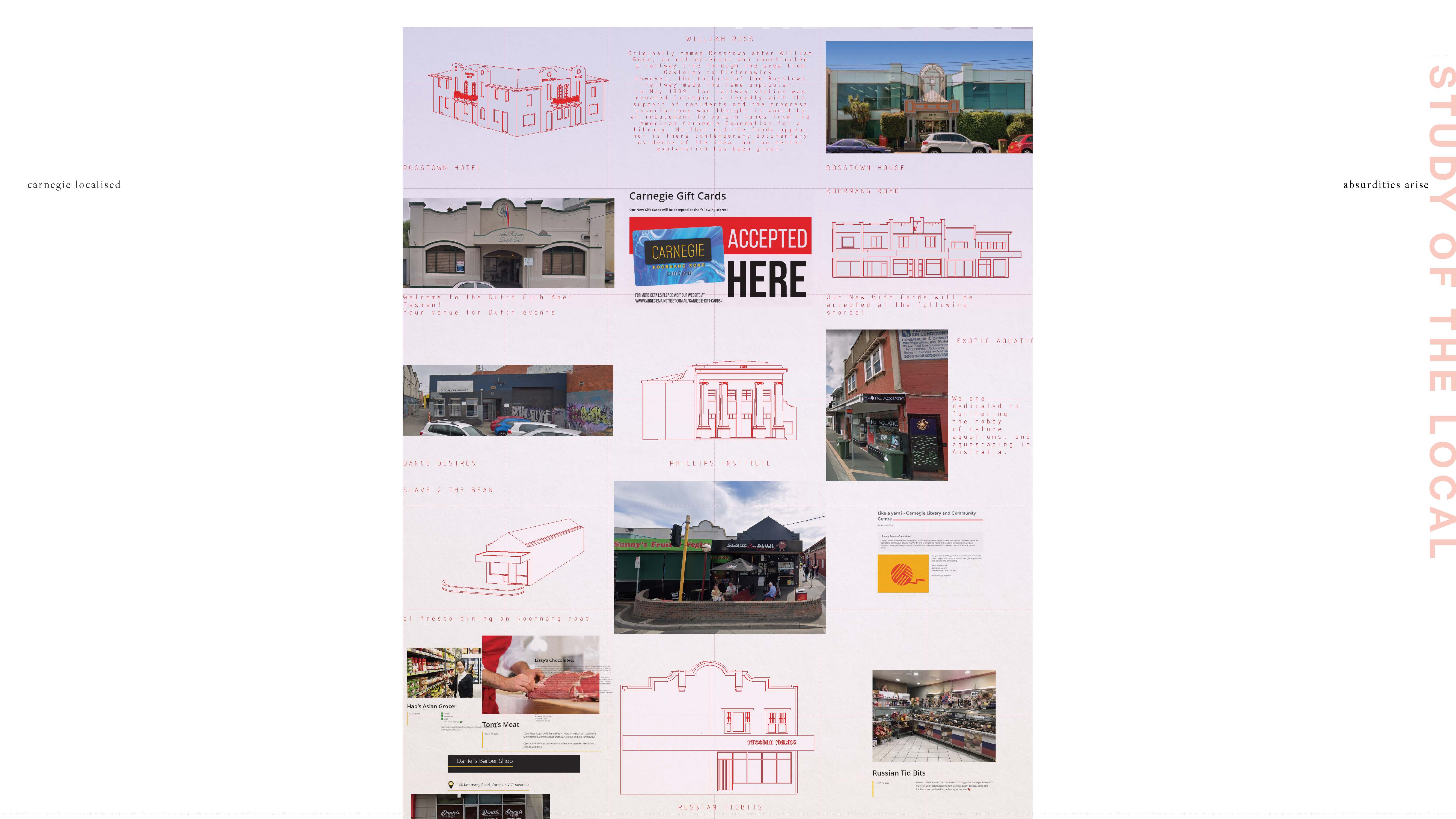
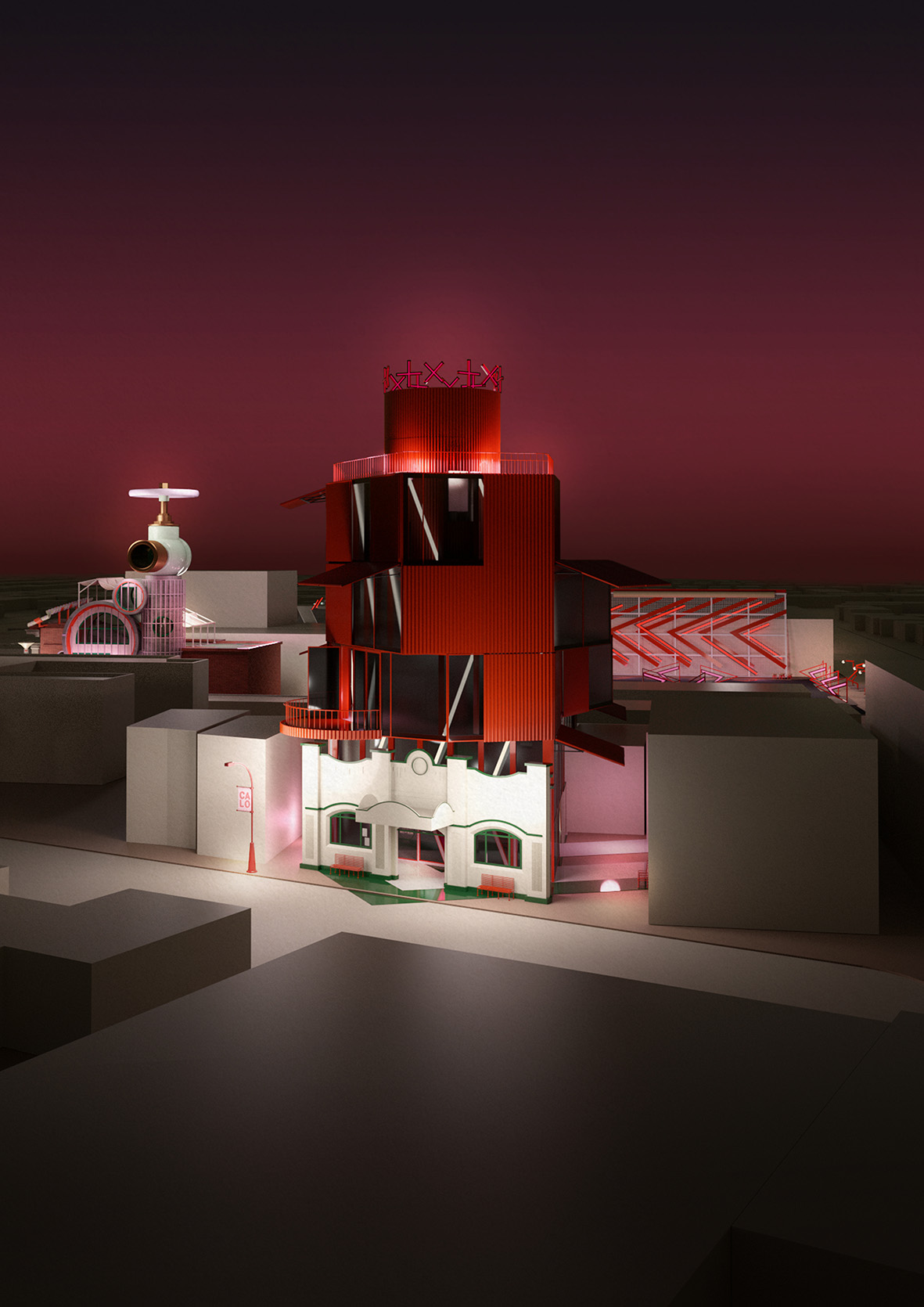
The first investigation is the Centre for Arts and Media, situated within the Abel Tasman Dutch Club.
The centre functions as an extension of the MONA Gallery, reflecting a partnership between the globally recognised museum of art and the local Abel Tasman Dutch Club, founded by Abel Tasman in Tasmania. This collaboration aims to encapsulate the entire expo arts precinct, positioning the centre as the hub for arts and media. On a local scale, it aligns with Carnegie’s vision for 2031 as a “destination for entertainment,” as outlined in the Glen Eira structure plans.


The Abel Tasman Dutch Club serves as a venue for Dutch-related events and also hosts Carnegie Hall, which now exists primarily as a Facebook presence and a forgotten cover of a Barry Humphries album. The arts centre seeks to express this concept of containment through its façade, where corrugated panels are lifted to reveal the interior.


The pavilion tests the boundaries of the local by integrating within the confines of the Abel Tasman building. The border is marked by the ground treatment, extending through the existing façade and into the arts centre. This ground condition continues to influence the centre’s structure, shaping the floor plates and interior circulation.
In its compact design, the pavilion preserves the Dutch Club’s function space on the ground floor while accommodating a museum of media and contemporary art on the first floor, sound and video labs on the second floor, and a MONA rooftop penthouse above. Visitors can gauge their position within the expo through the interior design, the containment of the original façade, and views of the surrounding pavilions.

A study of Carnegie reveals a collection of unique idiosyncrasies. Beyond the suburb’s name, which served as a funding model, Carnegie offers distinctive features such as the Koornang Road gift card, usable only at select stores along the main strip, and local Facebook personality Pete the Chef, known for his videos about Carnegie’s central business district and his habit of starting each video with a dreadful joke. This exposure of the absurd is used as a parameter for defining the local within the expo.


The second investigation is the Carnegie Science Pavilion, which extends from the Phillips Institute.
In partnership with the American Carnegie Institute Centre for Science and Natural History, the pavilion revives the 1880s Melbourne Exhibition Aquarium as an Institute of Marine Biology. The design draws inspiration from Robin Boyd’s Neptune Fishbowl, using it as an icon and a metaphor for the pavilion’s contents, with the aim of extending its influence as a centre for learning beyond Carnegie. The local absurdity is accentuated through the façade and the pavilion’s features. The pavilion’s design serves as a focal point visible from the sky rail, while its pipes and outdoor seating areas extend the institute’s presence to the street level.

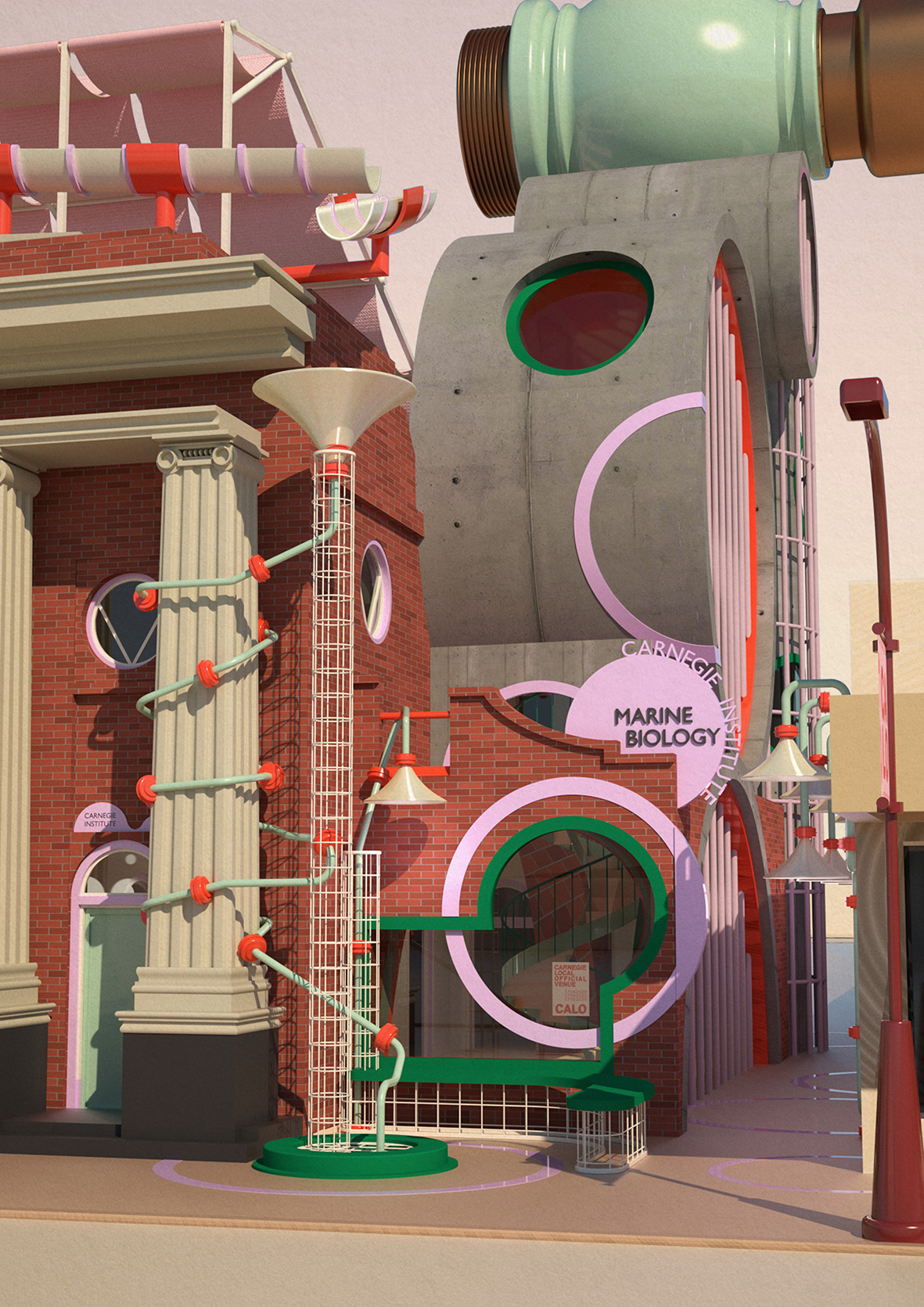
The pavilion functions as an annex to the existing Phillips Institute, with the zone boundary delineated by floor surface treatments and internal access to Phillips.
The boundary is extended horizontally by providing access to the roof, offering views of Carnegie throughout the expo and creating a canopy for the institute. The Phillips carpark is reimagined as a pedestrian access route through the site, serving as a gateway to the adjacent carpark gallery.


When boundaries are narrowed, the horizon becomes local. This project began as an exploration of borders as a means to understand identity. The investigations involved curating examples of borders from around the world to form a comprehension of their function, leading to the development of a typology that would help situate my own understanding of identity within a global context.
Margins and barriers—both physical and perceived—were abstracted from the site and master-planned onto Carnegie, resulting in a layered series of borders. This study aids in understanding the expo not only through moments when thresholds and boundaries are crossed but also by reframing the global context within Carnegie. These insights were then complemented by a focused examination of Carnegie, testing the concept of narrowed boundaries with existing businesses and infrastructure.


The third investigation is the Slave to the Bean Cafe.
The café’s integration into a local art precinct is achieved through a partnership with the Carnegie Institute Andy Warhol Gallery, extending the café’s role within the local art scene. This aligns with the Glen Eira City Council’s policy for art in public spaces. The café serves as a foyer for the carpark gallery located behind it. Coloured bricks mark the original boundary of the café and its extended threshold. This boundary begins with the expansion of the crosswalk, which continues into the carpark gallery.


The Bean Local Art Precinct acknowledges the Carnegie Activity Structure Plan’s goal to preserve the heritage character of Koornang Road. The roof structure creates a passage to the gallery, with a bent beam weaving through the corridor for café seating. The roof angle aligns with the existing café building, extending its heritage. The café’s foyer corridor celebrates Carnegie’s heritage by removing bricks to reveal the materiality of the adjacent building.
Thus, we conclude the event—a collection of pavilions embodying the architectural consequence of embracing Carnegie’s identity through the framework of the collective local. This approach reveals and celebrates the suburb’s unique characteristics and suggests that such local conditions are globally relevant.
My own experience of the local is interwoven into this project. What began as a self-portrait of isolation and an exploration of small-town identity has evolved into an understanding of heritage through my experience in Esperance, Western Australia. This understanding is applied to Carnegie, a suburb born from an unlikely local hyperbole in its procurement method. The process of mapping absurdity within the Carnegie expo stems from my specific local experience, which includes a town mascot seal, the world’s whitest beaches, and a full-scale Stonehenge.

 thexhausted.com